

If you want to know how a car battery works, the first thing to learn is its voltage. Voltage is a key part of any battery.
It tells us how much power the battery can give to start a car and run its electrical parts.
What Does Voltage Mean?
Voltage is like the pressure in a water pipe. It pushes electric current through wires. The higher the voltage, the stronger the push. Without voltage, electricity cannot flow.
In a car, the battery voltage helps start the engine and power lights, radio, and other parts.

Credit: batteryspecialists.com.au
Credit: www.sinexcel-re.com
Standard Voltage of a Car Battery
The usual voltage of a car battery is 12 volts. Most cars use a 12-volt battery. This is the normal size for everyday vehicles.
Why 12 volts? Because car batteries have six small cells inside. Each cell produces about 2 volts. When you add them together, 6 cells × 2 volts = 12 volts.
Inside The Battery Cells
- Each cell has two plates: one positive and one negative.
- The plates are inside a liquid called electrolyte.
- Chemical reactions between plates and electrolyte create electricity.
- Each cell gives about 2 volts.
What Happens When the Battery Voltage Changes?
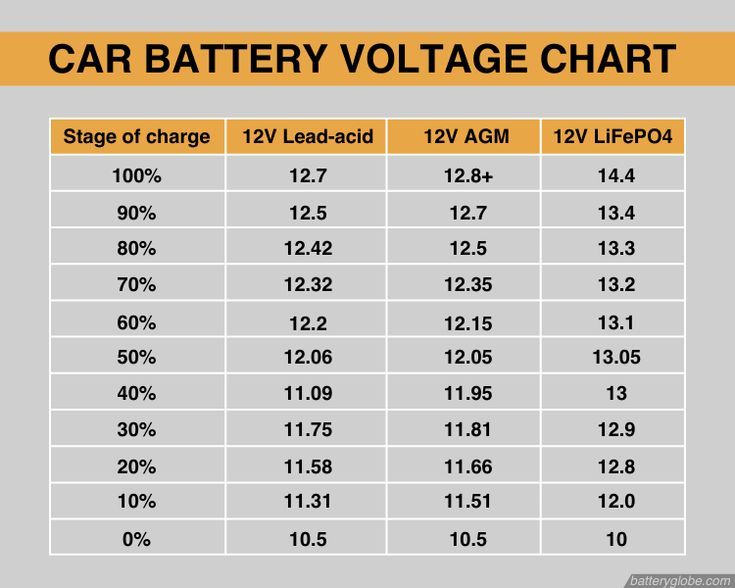
A car battery’s voltage can change. When the battery is fully charged, it shows around 12.6 volts.
When the car engine is running, the voltage rises to about 13.7 to 14.7 volts. This happens because the alternator charges the battery.
If the battery voltage drops below 12 volts, the battery may be weak. Below 11.8 volts, the battery is likely dead or failing.
Voltage Levels And Battery Health
| Voltage | Battery Condition |
|---|---|
| 12.6 volts or higher | Fully charged and healthy |
| 12.4 to 12.6 volts | Good charge |
| 12.0 to 12.4 volts | Partially charged, may need charging |
| Below 12.0 volts | Weak or discharged battery |
| Below 11.8 volts | Battery is likely dead |
Why Does a Car Battery Need 12 Volts?
Car parts need a certain amount of voltage to work well. The 12-volt system is common because it balances power and size. It is strong enough to start the engine but small enough to fit in the car.
Other vehicles may use different voltages. For example, trucks and buses often use 24-volt batteries. But for cars, 12 volts is the standard.
How to Check Your Car Battery Voltage
You can check battery voltage with a simple tool called a multimeter. It measures the voltage in volts.
Here is how you do it:
- Turn off the car engine.
- Set the multimeter to measure DC voltage.
- Connect the red probe to the battery’s positive terminal (+).
- Connect the black probe to the battery’s negative terminal (-).
- Read the number on the multimeter.
If the number is near 12.6 volts, the battery is good. If it is lower than 12 volts, the battery needs attention.
What Affects Car Battery Voltage?
Several things can change the battery voltage. Some are normal, some mean problems.
- Charging by the alternator: When the engine runs, the alternator charges the battery. Voltage rises to 13.7-14.7 volts.
- Battery age: Old batteries may have lower voltage.
- Temperature: Cold weather can lower voltage.
- Electrical loads: Using lights and radio can lower voltage when the engine is off.
- Battery condition: A damaged or weak battery has low voltage.
Why Does Voltage Matter for Your Car?
Voltage shows the battery’s health. Without enough voltage, the car may not start. Lights may be dim. Electronics might fail.
Good voltage means the battery is ready to work. It keeps the car engine starting and powers all electric parts.
Other Types of Car Batteries and Their Voltages
While most cars use 12-volt batteries, some electric and hybrid cars have different systems.
- Electric cars: Use high-voltage batteries, often hundreds of volts, to power motors.
- Hybrid cars: Use both a 12-volt battery and a high-voltage battery.
- Motorcycles: Often use smaller 12-volt batteries.
For normal cars, remember: 12 volts is the key number.
Summary: What You Need to Remember
The voltage of a car battery is usually 12 volts. This comes from six cells inside the battery. Each cell produces about 2 volts.
When fully charged, the battery shows about 12.6 volts. When the engine runs, the voltage rises to about 14 volts.
Voltage tells us if the battery is healthy. Low voltage means the battery is weak or dead.
You can check voltage with a multimeter. It helps you know if your battery needs charging or replacement.
Good voltage is important. It starts your car and powers lights and radio. Without it, your car will not work well.
Final Thoughts
Knowing the voltage of a car battery helps you take care of your car. It is a simple but important fact.
Check your battery voltage regularly. Keep the battery charged. Replace it when it gets too weak.
Your car will thank you with reliable starts and smooth runs.
Frequently Asked Questions
What Is The Standard Voltage Of A Car Battery?
A typical car battery has a voltage of 12 volts. This voltage powers the vehicle’s electrical systems and engine start.
How Does Battery Voltage Affect Car Performance?
Low voltage can cause starting problems and dim lights. Proper voltage ensures smooth engine operation and electrical function.
Can A Car Battery Voltage Drop When The Engine Is Off?
Yes, voltage naturally drops when the engine is off. A fully charged battery should read about 12. 6 volts at rest.
What Voltage Indicates A Dead Car Battery?
A voltage below 12 volts usually means the battery is weak or dead. It may need charging or replacement.

Sudatta is a passionate automotive enthusiast and expert in the field. With a keen eye for detail and a love for all things automotive, he shares insightful articles and reviews to ignite the automotive passion in readers.