
Car batteries are very important. They give power to start your car. Sometimes, batteries lose power. This means your car will not start. If this happens, you need to charge the battery.
Charging a car battery with a charger is easy. You can do it yourself safely. This guide will help you learn how to do it step by step.
What You Need Before Charging
Before you start, you need some things. These things will make charging safe and easy.
- Car battery charger: A tool made to charge batteries.
- Protective gloves and glasses: To keep your hands and eyes safe.
- Clean cloth: To clean battery terminals.
- Well-ventilated space: Charge the battery outside or in a place with fresh air.
Credit: www.homedepot.com
Safety Tips Before Charging
Charging a battery can be dangerous if done wrong. Follow these safety tips:
- Wear gloves and glasses.
- Keep sparks and flames away.
- Charge in fresh air, not in a closed room.
- Read the charger instructions carefully.
- Make sure the charger is off before connecting it.
Steps to Charge a Car Battery With a Charger
Now, let’s learn how to charge the battery. Follow these steps carefully.
Step 1: Find The Battery
Open the car hood. Look for the battery. It is a box with two cables. One cable is red, the other is black.
Step 2: Check Battery Terminals
Look at the battery terminals. They are metal parts where cables connect. If they are dirty, clean them. Use a cloth or wire brush. Dirt can stop charging.
Step 3: Turn Off The Charger
Make sure the charger is turned off. This is very important. You do not want sparks when connecting the cables.
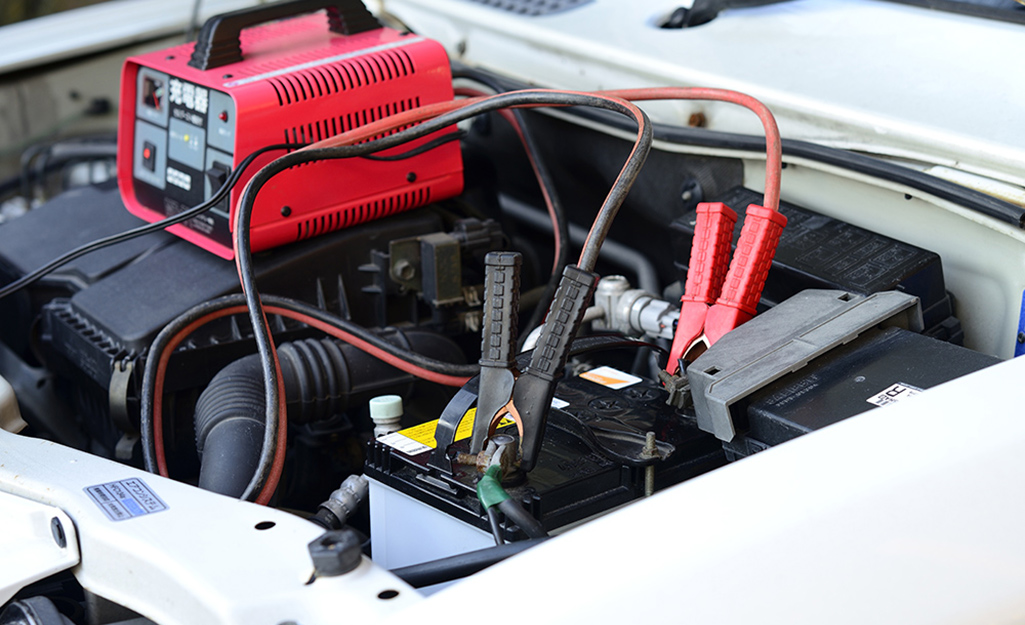
Step 4: Connect The Charger Cables
Look at the charger cables. One is red, one is black.
- Connect the red cable to the positive (+) battery terminal.
- Connect the black cable to the negative (-) battery terminal.
Connect carefully. Do not let cables touch each other.
Step 5: Set The Charger
Look at your charger settings. Choose the right voltage. Most car batteries are 12 volts.
Choose slow charging if possible. Slow charging is safer and better for the battery.
Step 6: Turn On The Charger
Now, turn on the charger. You will see lights or hear a sound. This means charging started.
Step 7: Wait For Charging
Charging takes time. It can take from a few hours to overnight. Do not rush.
Check the charger instructions for charging time. Do not overcharge the battery.
Step 8: Turn Off The Charger
When charging is done, turn off the charger first. Then, disconnect the cables.
Step 9: Remove Charger Cables
- First, remove the black cable from the battery.
- Then, remove the red cable.
This order keeps sparks away.
Step 10: Close The Car Hood
After removing cables, close the car hood. You are done!
Important Tips for Charging Car Batteries
- Do not smoke or use flames near the battery.
- Check battery water level if it is not sealed.
- Always charge in a well-ventilated area.
- Do not charge a frozen battery.
- Use the right charger for your battery type.
- Keep charger cables clean and in good condition.
Signs Your Battery Needs Charging
How do you know your battery needs charging? Look for these signs:
- Car engine cranks slowly or not at all.
- Dashboard lights are dim or flicker.
- Battery is old or weak.
- Electrical parts work slowly or fail.
Why Charge Your Battery Properly?
Charging your battery the right way helps it last longer. A good charge keeps the battery healthy. It helps your car start every time. Wrong charging can damage the battery. It may cause leaks or explosions.
What If You Don’t Have a Charger?
If you don’t have a charger, you can jump-start your car. But jump-starting is not charging. It only gives a short power boost. After jump-start, you still need to charge the battery properly.

Credit: www.batterystuff.com
How Long Does Charging Take?
Charging time depends on the battery size and charger power. A small charger may take 8 to 12 hours. A fast charger can take 1 to 3 hours. Slow charging is better for battery health.
Table: Charging Time vs Charger Type
| Charger Type | Charging Time | Best Use |
|---|---|---|
| Slow Charger (2 amps) | 8 to 12 hours | Battery maintenance, safe charging |
| Medium Charger (6-10 amps) | 3 to 6 hours | Regular charging |
| Fast Charger (over 10 amps) | 1 to 3 hours | Emergency charging |
How to Know When Charging Is Complete
Some chargers have lights or meters. These show battery status. When the light turns green, charging is done. If no light, check voltage with a multimeter. A fully charged battery shows about 12.6 volts.
What to Do After Charging
After charging, check the battery again. Make sure cables are tight. Clean any corrosion on terminals. Start the car to test the battery. If the car still does not start, battery may be bad and need replacement.
Frequently Asked Questions
How Long Does It Take To Charge A Car Battery Fully?
Charging time depends on the battery size and charger power. Usually, it takes 4 to 24 hours for a full charge.
Can I Charge A Car Battery Without Removing It?
Yes, most chargers allow charging without removing the battery. Just connect the charger clamps to the battery terminals carefully.
What Safety Precautions Should I Take When Charging?
Wear gloves and eye protection to avoid acid splashes. Charge in a well-ventilated area to prevent gas buildup.
Is It Safe To Use A Regular Charger On A Dead Battery?
Yes, but choose a charger with the right voltage and amperage. Using a charger too strong can damage the battery.
Conclusion
Charging a car battery with a charger is simple. You only need to follow safety steps. Use the right charger and connect cables carefully. Charge in a safe place with fresh air.
Wait for the right time and do not overcharge. After charging, test the battery and your car. This will keep your car running well. You can do it yourself and save time and money.

Sudatta is a passionate automotive enthusiast and expert in the field. With a keen eye for detail and a love for all things automotive, he shares insightful articles and reviews to ignite the automotive passion in readers.