
To check your engine oil level, pull out the dipstick, wipe it clean, reinsert it, and then pull it out again to see the oil mark. Ensure the car is parked on level ground and the engine is cool before you start.
Maintaining the right engine oil level is crucial for your vehicle’s health and performance. Regularly checking the oil ensures your engine stays lubricated and runs smoothly.
Neglecting this simple task can lead to increased friction, overheating, and even engine damage, which could be costly to repair.
A quick check can save you from these potential troubles. It’s recommended to inspect the oil level every few weeks or before a long trip. This proactive approach not only extends the life of your engine but also helps you become more familiar with your vehicle’s needs.
With consistent monitoring, you’ll be better equipped to identify changes in oil consumption patterns, which might indicate underlying mechanical issues.
Introduction To Engine Oil Maintenance
Maintaining your car’s engine oil is like keeping a watch on the health of your vehicle. It’s a simple task, yet essential for your car’s well-being.
Overlooking this can lead to unexpected breakdowns and costly repairs. Let’s ensure your ride stays smooth by understanding how to check engine oil levels properly.
The Importance Of Regular Checks
Regular oil checks are a must for any car owner. They keep your engine running smoothly and efficiently. Ignoring this can cause severe damage to your car’s engine. Here’s why you should make it a habit:
- Prevents engine damage: Low oil can cause overheating and wear.
- Ensures longevity: Your engine lasts longer with proper oil levels.
- Saves money: Avoid expensive repairs with routine checks.
Impact Of Oil Levels On Car Performance
The right oil level boosts your car’s performance. It’s crucial for lubrication, cooling, and cleaning engine parts. Here’s how proper oil levels impact your car:
| Oil Level | Impact on Performance |
|---|---|
| Too Low | Increased friction, overheating, and potential engine failure. |
| Too High | Excessive pressure, oil foaming, and reduced lubrication quality. |
| Just Right | Optimal lubrication, cooling, and overall top-notch performance. |
Check your oil level regularly to ensure your car runs its best. Stay ahead of potential issues and enjoy a smooth, reliable drive every time you hit the road.

Credit: in.pinterest.com
Required Tools And Materials
Before diving into the task of checking your engine oil level, let’s gather the necessary tools and materials. A smooth and effective process relies on having everything at hand. Ensure you have the correct type of oil and the right tools to avoid any hiccups.
Choosing The Right Oil
Selecting the proper oil for your vehicle is crucial. It ensures your engine runs smoothly and lasts longer. Check your vehicle’s manual for the manufacturer’s recommendation.
You will find specifics on the viscosity and oil type suited for your engine. Common oil types include conventional, synthetic, and high-mileage oil. Each type caters to different engine needs.
Tools For Checking Oil Level
To check the oil level accurately, you need the following tools:
- Dipstick: This tool comes with your vehicle. It measures the oil level.
- Clean Cloth: Use this to wipe the dipstick clean for an accurate reading.
- Gloves: Optional but recommended to keep your hands clean.
With these tools and materials ready, you can proceed to check your engine oil level confidently.
Preparation For Oil Level Inspection
Before checking your engine oil, proper preparation is key. It helps ensure accuracy and safety. Let’s walk through the steps to get ready for an oil level inspection.
Ensuring Safety First
Always prioritize safety. Here’s how:
- Turn off the engine and wait for it to cool down.
- Park on a flat surface to prevent oil from pooling to one side.
- Apply the parking brake firmly.
- Wear gloves and have a clean cloth handy.
Ideal Conditions For Accurate Readings
For a precise oil level reading, follow these guidelines:
- Check oil in ambient temperatures.
- Ensure the car has been off for 5-10 minutes.
- Use the dipstick correctly for consistent readings.
- Repeat the process if the reading is unclear.
Locating The Dipstick
Keeping your car in top shape starts with basic maintenance. One key task is checking the engine oil level. This guide will help you locate and understand your car’s dipstick, an essential tool for this process.
Identifying Engine Components
To start, open your car’s hood and secure it safely. You will see various components:
- Engine block – the large metal part in the center.
- Battery – usually found in a corner, often rectangular.
- Air filter – a box-like structure near the front.
Among these, look for a long, thin rod with a loop or handle at the top. This is the dipstick.
Dipstick Variations Across Models
Dipsticks can vary by car model. Here’s a quick overview:
| Car Model | Dipstick Color | Location |
|---|---|---|
| Honda Civic | Orange | Near the front, center |
| Ford F-150 | Yellow | To the side, near the engine block |
| Toyota Corolla | Red | Front, slightly to the left |
Always check your owner’s manual for specific details about your car’s dipstick location and appearance.
Extracting The Dipstick
Checking your engine oil is vital for your car’s health. The dipstick is your tool for this task. It lets you peek at your engine’s oil level with ease. Follow these steps to ensure you get a clear reading.
Clean Removal Techniques
Start with a cool engine. Heat can skew your reading. Find the dipstick handle. It’s usually a bright color like yellow or orange. Pull it out slowly. Wipe it clean with a rag.
Re-insert the dipstick, all the way back in. Wait a moment. Pull it out again to check the oil level. Look for the “Full” mark. If the oil streak is at or above this mark, you’re good.
Avoiding Contaminants
Keep your hands clean before touching the dipstick. Dirt from your hands can mix with the oil. This might harm your engine later.
Use a clean cloth to wipe the dipstick. This ensures you’re not putting old oil or dirt back in. Always avoid water near the engine oil. Even a small drop can cause damage.
Remember, checking your oil regularly keeps your engine happy. A happy engine means a smooth ride for you. Follow these steps to keep your car running well.
Reading The Oil Level
Keeping your engine running smoothly requires regular oil checks. A correct oil level ensures optimal lubrication and performance. Below, learn how to read the oil level accurately.
Interpreting Dipstick Markings
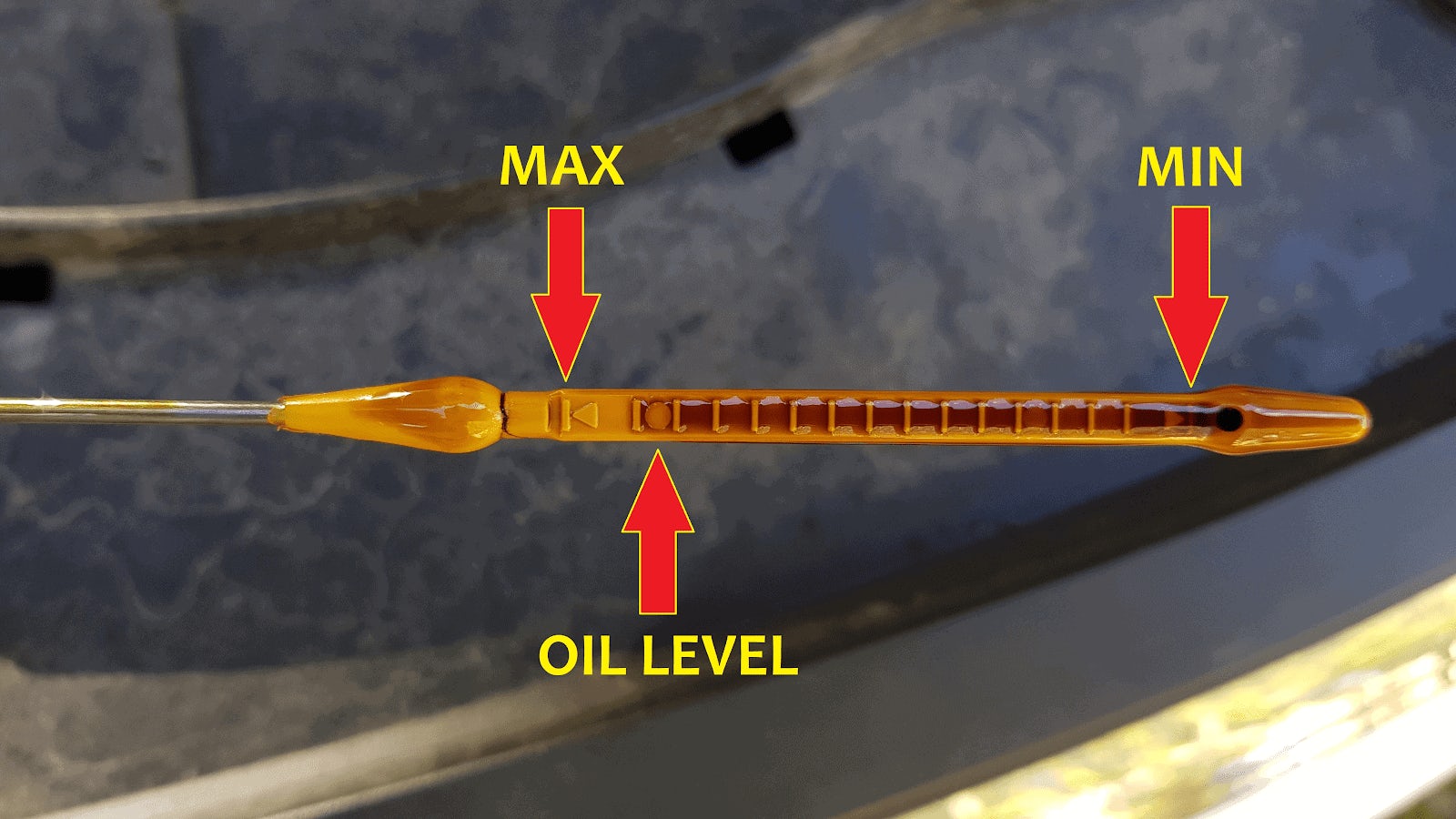
Every car has a dipstick to measure oil levels. It’s marked with lines or pinches. These indicate the minimum and maximum oil levels.
- Minimum – Do not let oil drop below this line.
- Maximum – Avoid filling above this mark.
To read it, remove the dipstick and wipe it clean. Reinsert it fully, pull it out, and note the oil film. The level should sit between the two marks. If the oil is below the minimum mark, you need to add oil.
Determining Optimal Oil Level
For the best engine performance, maintain the oil level in the optimal range. This is usually just below the maximum mark.
A clear oil mark on the dipstick shows good oil level. If the mark is hazy or spread out, the oil may be too high and need draining.
Use a clean cloth to get an accurate reading. Check the level on a level surface for the best result. Repeat the process if you’re unsure about the reading.
Ensure your engine is off and cool before checking. This allows the oil to settle, giving a true reading.
Regularly checking your oil extends engine life. It also saves on costly repairs. Aim to check your engine oil every month or before a long trip.
Topping Up Engine Oil
Topping up engine oil is essential for your car’s health. It ensures smooth operation and longevity of the engine. Below are detailed steps and tips to help you top up your engine oil correctly.
Selecting The Correct Oil
Choosing the right oil for your car is crucial. Check your vehicle’s manual to find the recommended oil type. It usually specifies the viscosity level and whether synthetic or conventional oil is preferred.
| Type of Oil | Benefits |
|---|---|
| Synthetic Oil | Better at extreme temperatures, lasts longer. |
| Conventional Oil | Good for regular use, more affordable. |
| High-Mileage Oil | Designed for cars with over 75,000 miles. |
Step-by-step Refilling Process
- Turn off the car and wait for the engine to cool down.
- Locate the oil dipstick and pull it out.
- Wipe it clean, reinsert it fully, and pull it out again to check the oil level.
- If the level is below the full mark, prepare to add oil.
- Open the oil filler cap on top of the engine.
- Using a funnel, pour oil slowly into the engine.
- Check the level again with the dipstick to ensure proper filling.
- Replace the dipstick and oil filler cap securely.
Always double-check for leaks and the oil cap’s tightness to prevent engine damage.
Common Mistakes To Avoid
Checking your engine oil level is a vital part of vehicle maintenance. Yet, many car owners make mistakes that can lead to engine damage or poor performance. Let’s explore common errors to steer clear of when managing your engine oil.
Overfilling Risks
It might seem like more oil equals better lubrication. That’s a myth. Overfilling your engine can cause damage. Here’s why:
- Increased pressure can lead to oil leaks.
- Air bubbles may form, reducing oil effectiveness.
- Excess oil can reach the combustion chamber, causing smoke and potential harm.
Always aim for the ‘Full’ mark on your dipstick, never above it.
Ignoring Oil Quality And Viscosity
Not all oils are created equal. The wrong type can affect your engine’s health. Consider these points:
| Oil Quality | Why It Matters |
|---|---|
| Synthetic vs. Conventional | Synthetics often provide better protection and performance. |
| Certifications | Look for industry standards like API or ACEA. |
Viscosity, or oil thickness, is crucial. Always follow your manufacturer’s recommendation. Using the incorrect viscosity can lead to:
- Reduced fuel efficiency.
- Poor cold starts.
- Increased engine wear.
Frequency Of Oil Checks
Checking your engine oil level is a quick, easy task that is crucial for vehicle maintenance. It ensures your engine runs smoothly and avoids costly repairs. Knowing how often to check the oil can save you from future headaches.
Recommendations For Different Vehicles
Each vehicle has its own needs. Check your owner’s manual for specific guidelines. Here’s a general overview:
- New cars: Once a month
- Older cars: Every other fuel fill-up
- High-mileage cars: More frequent checks
Adapting To Driving Conditions
Your driving habits can affect how often you should check your oil. Consider these conditions:
| Condition | Frequency |
|---|---|
| Severe weather | Check more often |
| Towing | Check after every use |
| Off-roading | Check before and after trips |
| City driving | Check bi-weekly |
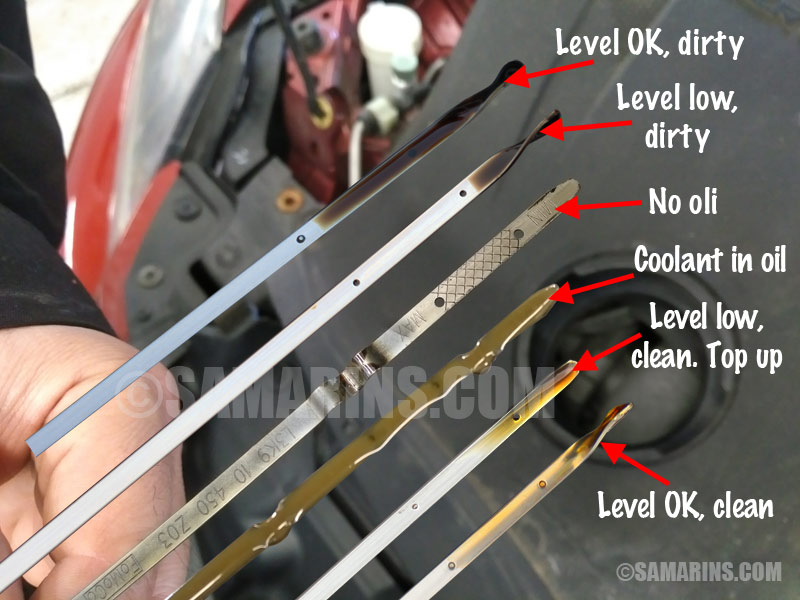
Credit: www.samarins.com
Long-term Engine Care
Keeping your car’s engine in top shape is crucial. Long-term engine care extends your vehicle’s life and ensures it runs smoothly. One key aspect of this care is monitoring your engine oil level.
Proper maintenance not only prevents future problems but also saves money on costly repairs. Let’s dive into the best practices for maintaining your engine’s health.
Scheduling Professional Services
Regular check-ups by a professional are vital for your engine. Even if you’re handy with a dipstick, a mechanic’s expertise goes a long way.
They spot issues you might miss and provide valuable advice on oil types and changes. Set reminders for oil service to keep your engine at its best.
- Annual inspections to assess engine condition
- Oil change intervals based on manufacturer’s recommendation
- Expert assessments for optimal engine performance
Benefits Of Consistent Maintenance
Consistent maintenance is the backbone of engine longevity. Regular oil checks and changes prevent wear and tear, keeping your engine purring.
It boosts performance and fuel efficiency too. Here’s how sticking to a maintenance routine benefits you:
| Benefit | Description |
|---|---|
| Reduced Wear | Clean oil minimizes friction in engine parts |
| Better Performance | Smooth engine operation leads to a better driving experience |
| Increased Fuel Economy | Efficient engines use less fuel |
| Lower Repair Costs | Preventive care cuts down on expensive repairs |
Credit: zutobi.com
Frequently Asked Questions
Do You Check The Oil When The Engine Is Hot Or Cold?
Check your oil when the engine is cold to ensure accurate level readings. Cold conditions allow oil to settle and provide a precise measurement.
What Is The Correct Way To Check Oil Level?
To check the oil level, park on a level surface and turn off the engine. Wait for the engine to cool, then pull out the dipstick. Wipe it clean, reinsert it fully, and remove it again to check the oil mark against the indicators.
How Much Oil Should Be On The Dipstick?
Oil should reach the “Full” mark on your dipstick. Avoid exceeding this level or falling below the “Low” mark to ensure proper engine lubrication.
How To Tell If Engine Oil Is Low?
To check if your engine oil is low, start by examining the dipstick. Pull it out, wipe it clean, reinsert it, then pull it out again to check the oil level. If it falls below the marked “full” line, your oil is low.
Also, watch for the oil warning light on your dashboard.
Conclusion
Regularly checking your engine oil is crucial for maintaining your vehicle’s health. This simple task can extend your car’s lifespan and enhance its performance.
Remember, always check the oil level when the engine is cool for accurate results. Keep your car running smoothly by staying on top of this basic maintenance practice.

Sudatta is a passionate automotive enthusiast and expert in the field. With a keen eye for detail and a love for all things automotive, he shares insightful articles and reviews to ignite the automotive passion in readers.