
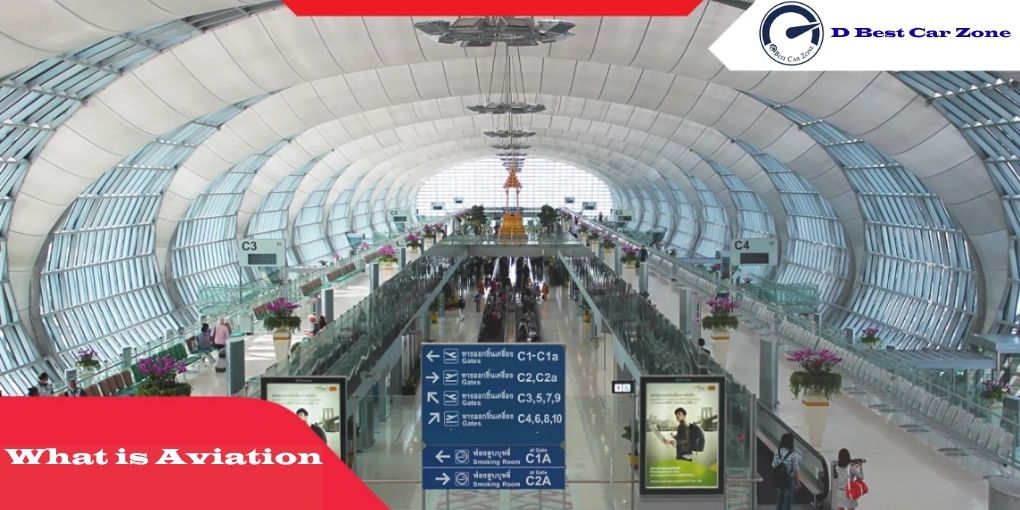
Aviation refers to the activities surrounding mechanical flight and the aircraft industry. It encompasses the design, development, production, operation, and use of aircraft.
The world of aviation extends far beyond just commercial airliners; it includes military jets, helicopters, gliders, and space vehicles such as rockets and spacecraft.
Ever since the Wright brothers’ first powered flight in 1903, aviation has grown into an indispensable means of transportation, enabling quick travel over great distances and access to remote areas.
With constant technological advancements, aviation plays a crucial role in connecting people, powering economies, and facilitating international trade and tourism.
Safety, efficiency and sustainability remain at the forefront of this dynamic field, as it continually strives to minimize its environmental impact and improve security measures for passengers and cargo alike. Today, aviation is a symbol of human ingenuity and remains a key driver of global progress.
The Birth Of Aviation
Human flight began over 100 years ago. People wanted to fly like birds. They invented machines to do it. This dream created a new world. Let’s explore how aviation started.
Early Dreams Of Flight
Long before planes, humans dreamed of soaring high. This dream sparked many ideas. Some created wings. Leonardo da Vinci drew flying machines. None worked well.
- Drawing inspiration from birds: Humans watched birds and thought about flight.
- Inventing flying machines: Many designs came up, like the ornithopter.
- Studying the mechanics: They learned about lift, thrust, and air currents.
Wright Brothers’ Leap
Orville and Wilbur Wright changed history. They used science for flight. On December 17, 1903, they flew the first airplane. This day is famous.
| Date | Event |
|---|---|
| 1903 | First successful airplane flight |
| 1904-1905 | Further flight improvements |
Fundamentals Of Flight
Flight turns a dream into reality. Birds do it with ease, but humans have to rely on complex machinery and an understanding of the Fundamentals of Flight.
The mastery over the skies depends on two pillars: the physics enabling lift and thoughtful aircraft design. Let’s soar into the details that empower planes to take to the heavens.
Physics That Lift Us
The secret to flight lies in four fundamental forces: lift, gravity, thrust, and drag. Lift opposes gravity, keeping the aircraft aloft, while thrust moves it forward, countering drag. The intricacies of these forces come alive through two pivotal principles:
- Bernoulli’s Principle – Fast-moving air creates low pressure. This is key to lift.
- Newton’s Third Law – For every action, there’s an equal and opposite reaction. This applies to thrust and lift.
Understanding these principles help pilots navigate the skies.
Aircraft Design Essentials
The art of aircraft design involves much more than aesthetics. It’s a blend of form, function, and safety. Design elements include:
- Aerodynamics – Shapes that cut through air,
- Material Science – Strong yet lightweight materials,
- Wing Configuration – Adjusts for various flight conditions.
Designers work tirelessly to refine these elements, crafting aircraft capable of higher, faster, and safer flights. Indeed, the magic of flight starts on the drawing board.
Categories Of Aircraft
The sky is filled with various types of aircraft, each designed for specific purposes.
From commercial flights to personal travel, the world of aviation boasts an incredible variety of flying machines.
From Gliders to Jets
From Gliders To Jets
Gliders and jets represent two extremes in the aircraft family.
Gliders soar without engines, using currents of air to stay aloft.
Jets, on the other hand, use powerful engines to travel quickly through the skies.
- Gliders: Engine-less, rely on thermal currents
- Propeller Planes: Single or multiple engines, used for shorter trips
- Commercial Jets: Long-distance travel, carry many passengers
- Private Jets: Luxury travel, smaller groups
Helicopters and Drones
Helicopters And Drones
Helicopters and drones offer unique advantages in aviation.
Helicopters can hover and land in small spaces. Drones, both manned and unmanned, are versatile for varied tasks.
| Helicopters | Drones |
|---|---|
| Search and rescue missions | Aerial photography |
| Medical emergency transport | Wildlife monitoring |
| Traffic control assistance | Package delivery |

Credit: engiarchis.com
Piloting The Skies
Welcome to the exhilarating world of aviation, a realm where the sky is not a limit but a canvas for pilots. These skilled individuals do not just navigate the vast blue; they command it. Let’s soar into the world of those who pilot the skies.
Becoming A Pilot
To become a pilot, one must embark on a challenging journey. It starts with a dream, followed by rigorous training.
- Obtain a high school diploma (it’s a must).
- Go for a medical checkup (good health is crucial).
- Choose a flight school (quality training matters).
- Log flight hours (practice leads to perfection).
- Pass exams (knowledge and skills are tested).
- Earn a license (it’s your ticket to the skies).
Every pilot’s journey is unique, but resilience and determination are common traits.
The Role Of A Flight Crew
A flight crew is an elite team that ensures a safe and pleasant journey through the skies.
| Position | Responsibilities |
|---|---|
| Pilot | Commands the aircraft and makes key decisions. |
| Co-Pilot/First Officer | Assists the pilot and shares duties. |
| Flight Engineers | Monitors systems and troubleshoots problems. |
| Purser/Lead Flight Attendant | Manages the cabin crew for safety and service. |
| Flight Attendants | Cares for passengers and handles emergencies. |
The flight crew works as a cohesive unit, with the safety and comfort of passengers as their top priority.
Air Traffic Control
The heart of aviation safety beats within the operations of Air Traffic Control (ATC). ATC professionals serve as the invisible guardians of the skies. They guide pilots from takeoff to landing, ensuring smooth and orderly traffic in the cloud-clad highways.
Let’s delve into the critical role they play and explore how technology is shaping the future of aviation.
Keeping Skies Safe
Air Traffic Controllers are the unseen sentinels ensuring that every aircraft maintains a safe distance from others. They use sophisticated radar and communication systems to track each flight.
By orchestrating the flow of airplanes, controllers prevent in-air collisions and keep the skies secure.
- Monitor and direct the movement of aircraft on the ground and through controlled airspace.
- Provide safety alerts and critical information about weather and flight paths.
- Coordinate takeoffs and landings to minimize delays and maximize efficiency.
The Future Of Air Traffic Technology
Technological advancements promise to revolutionize air traffic management. Innovations target enhanced precision and improved decision-making.
These advancements contribute to a greener aviation industry by optimizing flight paths, thus reducing fuel consumption and emissions.
| Technology | Benefits |
|---|---|
| Real-Time Data Sharing | Enables a dynamic response to changes in air traffic and environmental conditions. |
| Advanced Navigation Systems | Allows for safer and more efficient routing of aircraft. |
| Artificial Intelligence and Automation | Improves traffic prediction and reduces the workload for human controllers. |
New software and satellite-based systems are being explored to enhance connectivity between pilots and ATC. These initiatives are paving the way for a safer, more efficient, and future-ready aviation landscape.

Credit: www.facebook.com
Aviation Safety
Aviation Safety remains at the forefront of the aerospace industry. Every flight entails thorough planning and consideration of safety measures.
This commitment ensures that air travel is among the safest modes of transportation. Let’s explore the key factors that contribute to outstanding aviation safety records.
Regulations And Standards
Strict rules govern the skies. International and regional organizations set these rules. They aim to maintain high safety levels for all.
- The International Civil Aviation Organization (ICAO) develops policies for global aviation.
- National aviation authorities, like the FAA in the US, enforce rules within their airspace.
- Aircraft manufacturers must meet safety criteria before planes can fly.
- Airlines undergo regular checks to ensure they follow all guidelines.
These regulations cover aircraft design, operations, maintenance, and crew training. All are important for safety. Airlines show compliance through certifications and audits.
Dealing With Emergencies
Effective emergency handling is vital. Crews prepare with rigorous training. Each plane carries safety equipment. Procedures exist for all kinds of unexpected situations.
| Type of Emergency | Crew Response | Equipment Used |
|---|---|---|
| Medical Emergency | First Aid, Coordination with Ground Medical | Medical Kit, Defibrillator |
| Engine Failure | Execute Emergency Landing Procedures | Backup Systems, Checklists |
| Cabin Depressurization | Oxygen Masks Deployment, Emergency Descent | Oxygen System, Masks for Passengers |
Pilots use simulators to practice these procedures. Crew drills include emergency evacuations and firefighting. All aim to keep passengers safe during unexpected events.
Environmental Impact Of Flight
Flying is fast and convenient, but it brings challenges for our planet. Planes emit gases and particles that affect the atmosphere and contribute to climate change. As we take to the skies, understanding the environmental footprint of aviation becomes crucial.
Emission Concerns
The spotlight on aviation emissions centers on carbon dioxide (CO2). Yet planes also release nitrogen oxides (NOx), water vapor, and other particulates. Together, these increase the greenhouse effect and warm our planet.
- CO2 from fuel burn is significant.
- NOx affects air quality and can form ozone.
- Contrails and clouds formed by airplanes alter the atmospheric balance.
Sustainable Aviation Solutions
Leaders in aviation are exploring greener options. They aim to reduce the industry’s carbon footprint. Innovative technologies and practices hold promise for a cleaner future.
| Strategy | Impact |
|---|---|
| Alternative Fuels | Cut down on CO2 emissions. |
| More Efficient Aircraft | Reduce fuel use and emissions. |
| Optimized Flight Paths | Lower fuel burn and noise. |
- Use of biofuels mixes.
- Development of electric planes.
- Investing in carbon offset programs.

Credit: www.nytimes.com
The Romance Of Flying
The sky has long been a canvas for the dreams of humankind. The Romance of Flying takes these dreams and transforms them into reality.
It births a world where distances shrink, and the globe becomes a playground. This enchanting allure, a mixture of adventure, freedom, and wonder, encapsulates the essence of aviation’s appeal.
Cultural Significance
Aviation stretches far beyond the realms of transportation. It symbolizes progress and human achievement. Early aviators were seen as pioneers, charting unknown skies.
Today, flight connects cultures, fuels economies, and bridges distant lands. Stories of early flights and the courage they required live on, stirring hearts and inspiring minds across generations.
- Wright brothers’ first flight: A milestone in human history
- Amelia Earhart’s adventures: Captivating tales of bravery and exploration
- Iconic air races: Showcasing skill, speed, and the human spirit
Aviation In Pop Culture
Flying has always had a special place in pop culture. Movies, books, and music captivate audiences with tales of the skies. Heroes of the air grace screens, embodying the freedom of flight.
Audiences are whisked away on fictional journeys, experiencing the rush pilots feel. Aviation themes often signify escape, exploration, and ambition.
| Medium | Examples |
|---|---|
| Movies |
|
| Books |
|
| Music |
|
Catchy tunes and thrilling narratives ensure that the fantasy and romance of flight remain etched in our culture. Aviation’s impact on pop culture is undeniable and continues to inspire a sense of awe and the human desire to soar above the clouds.
Innovations Shaping The Future
The sky’s the limit when we talk about the future of aviation. Cutting-edge technologies are paving the way for safer, cleaner, and more efficient air travel.
Let’s delve into the fascinating realm of aerial advancements and see how they’re catapulting us into a new era of flying.
Advancements In Avionics
Navigation and communication systems are harnessing the power of satellite technology to become more precise. These innovations mean pilots can fly with more confidence, even in challenging conditions.
- Higher resolution glass cockpit displays.
- Real-time weather tracking for in-flight adjustments.
- Advanced collision avoidance systems.
With the integration of Artificial Intelligence (AI), avionics are becoming smarter, ensuring decision-making is more reliable than ever.
Revolutionary Aircraft Designs
Breathtaking designs are revolutionizing how we view aircraft aesthetics and function.
| Feature | Impact |
|---|---|
| Blended Wing Bodies | Improved aerodynamics reduce fuel usage. |
| Electric Propulsion Engines | Lower emissions lead to eco-friendly skies. |
| Lightweight Composite Materials | Aircraft can carry more and fly farther. |
Supersonic jets are making a comeback, aiming to slash travel times in half while ensuring noise and environmental concerns are addressed.
Innovative aircraft designs hold the promise of altering not just how we travel, but the very skies we traverse. The future looks bright and, above all, thrilling.
Careers In The Aviation Industry
The aviation industry offers exciting career paths. From controlling massive aircrafts to designing sophisticated systems, the sky is truly the limit. Jobs vary from pilots to engineers and beyond.
The industry continues to grow, bringing forth new opportunities. Below, let’s explore some career paths in the world of aviation.
Pilot And Engineering Paths
Becoming a pilot is a dream for many. Pilots not only fly planes but also ensure passenger safety. They must complete extensive training and possess strong skills in navigation and communication.
Engineering roles also play a crucial role. They design, maintain, and improve aircraft systems for optimal performance.
- Commercial Pilot: Fly for airlines, ensuring efficient and safe travel.
- Air Traffic Controller: Manage the flow of planes on the ground and through the sky.
- Aerospace Engineer: Innovate and refine flight technology and machinery.
- Aircraft Mechanic: Keep planes flying safely with regular maintenance and repairs.
Emerging Roles And Opportunities
The aviation industry is rapidly evolving. New technologies like drones and electric planes are creating fresh job roles. Sustainability in aviation is also a hot topic, with green initiatives shaping future careers.
- Drone Operators: Control unmanned aircraft for a variety of tasks.
- Sustainability Managers: Focus on eco-friendly aviation practices.
- Aviation Data Analysts: Use numbers to boost operational efficiency.
- Customer Experience Specialists: Elevate service quality for travelers.
Each role requires a unique set of skills and passions. With dedication and hard work, careers in aviation can lift you to new heights.
Frequently Asked Questions Of What Is Aviation
What Is Aviation In Simple Words?
Aviation refers to the activities surrounding mechanical flight and aircraft. It encompasses the design, development, production, operation, and use of aircraft, often involving navigational techniques.
What Are The 3 Types Of Aviation?
The three types of aviation are commercial aviation, general aviation, and military aviation. Each category serves different transportation or defense purposes.
What Is The Job Of Aviation?
The job of aviation involves managing aircraft operations, ensuring safe flights, and transporting passengers or cargo. It encompasses pilot duties, air traffic control, and maintenance roles.
What Is Considered Aviation?
Aviation encompasses the design, development, production, operation, and use of aircraft, often for transportation or military purposes. This field includes piloting, air traffic control, and aircraft maintenance.
Conclusion
Aviation encompasses a vast sky-high domain, where technology and human ambition soar freely. It plays a pivotal role in global connectivity and innovation.
Let’s embrace the marvels of flight that propel us towards a progressively linked and advanced future. Always remember, the sky is just the beginning.

Sudatta is a passionate automotive enthusiast and expert in the field. With a keen eye for detail and a love for all things automotive, he shares insightful articles and reviews to ignite the automotive passion in readers.